Know when to give way
The official NaTIS learner manual says a driver or rider must give immediate right of way to an emergency vehicle sounding a siren and displaying emergency warning lights. It lists ambulances, fire and rescue vehicles, traffic officers on duty, and civil-protection vehicles among the examples.
Do not wait until the vehicle is directly behind you. If you hear a siren or see warning lights, look for where it is coming from and which path it needs. The sound may reach you before the vehicle is visible.
Stay calm and find a safe opening
Check your mirrors, the road ahead, nearby lanes, and people at the roadside. Signal your intention when you can make a safe move. Give the emergency vehicle a clear path as soon as it is safe to do so.
Avoid slamming on the brakes, swerving into another vehicle, or stopping where you block a junction. Arrive Alive's emergency-response advice makes the same practical point: make way safely instead of creating another emergency.
At a junction, watch the whole scene
If you are approaching a junction, slow your decision down. The emergency vehicle may be coming from a side road, and a green light for you does not make the crossing clear. Let it pass before you commit to your movement.
If you are already stopped at a red light or stop line, do not blindly drive into the junction to clear a path. Watch for an opening that is lawful and safe, and follow any direction from a traffic officer. Your aim is to help without adding a second hazard.
Check again after it passes
Keep looking after the first emergency vehicle goes by. Another response vehicle may be close behind it, and other drivers may still be changing position. Re-enter the traffic flow only when you can see a safe gap.
Do not follow close behind the emergency vehicle to get through traffic. Give it working room and return to your normal, attentive driving.
Try a parked four-step practice
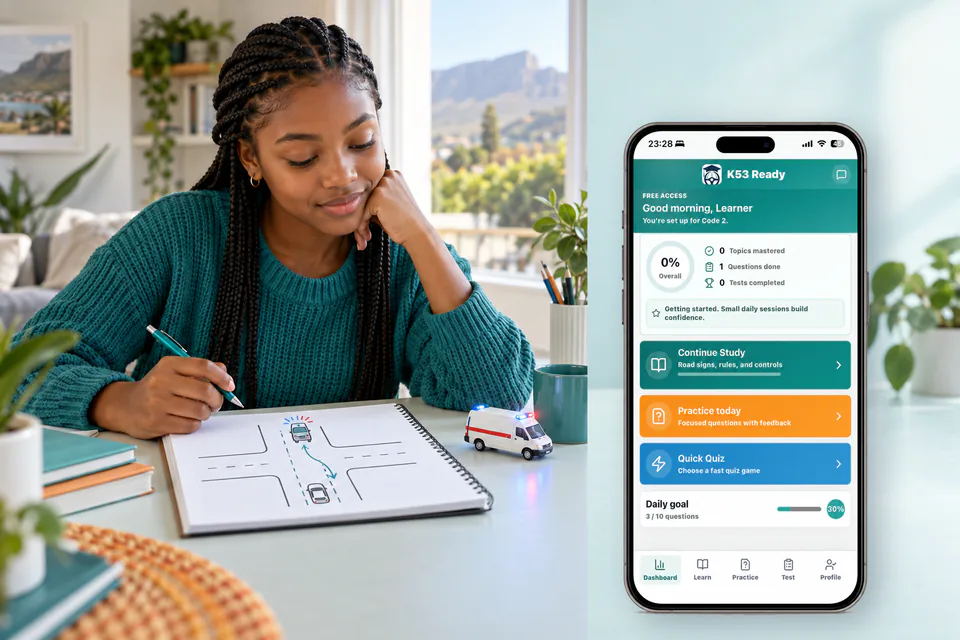
Draw a simple two-lane road and junction. Add an ambulance approaching from behind, then one approaching from the side. For each sketch, say these four checks aloud:
- Notice: what sound or lights tell you to pay attention?
- Locate: where is the emergency vehicle, and where does it need to go?
- Make space: which movement gives it room without surprising another road user?
- Check again: is another response vehicle or road user still moving through the gap?
Then use a short K53 Ready rules practice session and explain any answer you guessed in your own words. Put the app away before a supervised drive.