Read the yield sign as a decision point
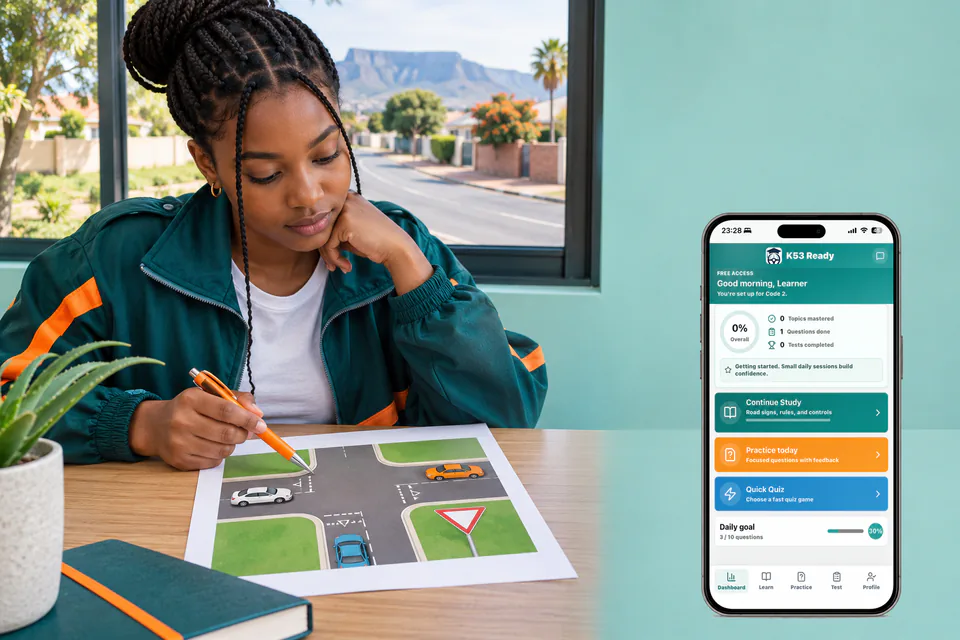
The NaTIS learner manual places the R2 yield sign at intersections and railway crossings. If other traffic is approaching, reduce speed and stop if necessary. The key word is necessary: you must be ready to stop, even though the sign does not require a stop every time.
Look early enough to understand who may cross your path. If you cannot see clearly, take the time you need to make a safe decision.
Give way at the line, even without a sign
The RTM2 yield line marks where you must give priority to someone crossing, or wanting to cross, your path of travel. The NaTIS manual says this still applies when there is no yield sign beside the line.
Do not let the absence of a sign turn the painted line into background detail. Spot the line, check every direction that could bring traffic across your route, and wait if the path is not clear.
Separate a yield sign from a stop/yield sign
The R1.2 stop/yield sign gives different instructions for different movements. If you go straight, stop behind the stop line. If you turn left, yield to traffic close enough to create a hazard and move only when safe.
In a practice question, first name your intended direction. That small step stops you from applying the left-turn exception to a straight-ahead answer.
Check for people as well as vehicles
The R2.1 yield-to-pedestrians sign asks you to give priority to people crossing or wanting to cross. Look towards both sides of the crossing and be ready to stop.
A clear gap between vehicles is not the whole scene. Scan for pedestrians, cyclists and any road user whose path could meet yours before moving.
Practise one calm yield routine
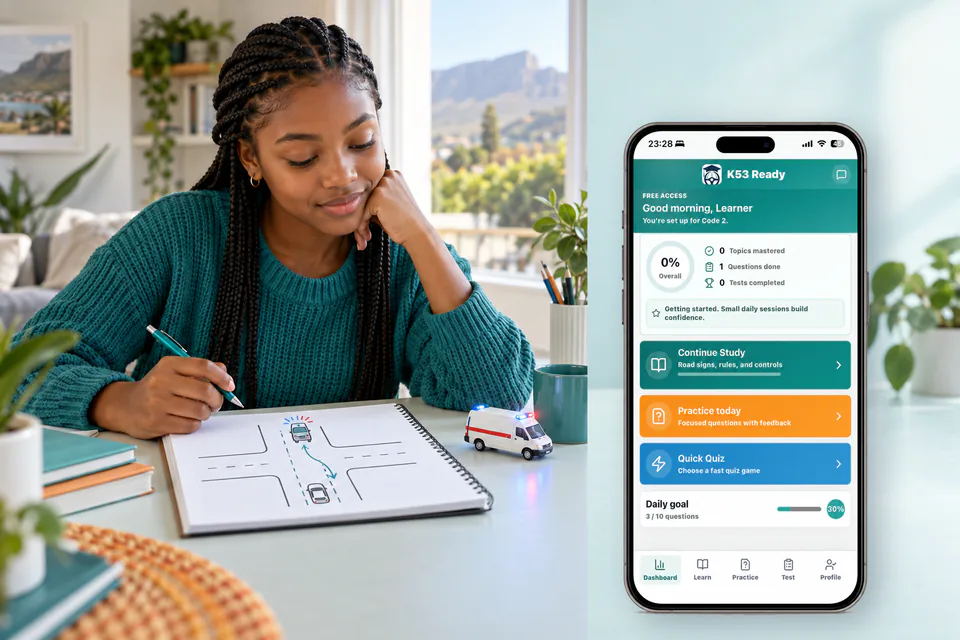
While parked, draw a simple T-junction and talk through these steps with your supervisor:
- Spot the instruction: is it R2, RTM2, R1.2 or R2.1?
- Name your movement: straight, left or another direction?
- Look for paths that cross yours, including people walking.
- Slow early, give way, and stop when necessary. Move only when safe.
Then try a few K53 Ready road-sign and rules questions. Explain why each answer is safe, not just what the sign is called. Put the app away before the vehicle moves.