Start with the vehicle, not the test
It is tempting to think of the learner's test as one big K53 test. The shared road signs and rules matter for everyone, but the learner code still matters because it connects your licence to a vehicle category.
Ask yourself what you want to learn on first: a motorcycle or similar Code 1 vehicle, a light vehicle under 3 500 kg, or a heavier vehicle. That answer usually points you toward Code 1, Code 2, or Code 3.
Code 1 is for motorcycles and similar vehicles
South African Government guidance places motorcycles, motor tricycles, and quadrucycles in Code 1. Western Cape Government guidance also treats motorcycles as their own learner licence category, with age points for smaller and larger motorcycles.
If your real goal is a motorcycle, do not prepare as if you are writing only for a car. You still need road signs and rules, but your vehicle-control thinking should match a motorcycle.
Code 2 is the usual light-vehicle route
The official guidance describes Code 2 as the category for motor vehicles with a gross vehicle mass not exceeding 3 500 kg. That can include a car, minibus, bus, or goods vehicle in the light-vehicle range, so do not think only in terms of a small hatchback.
Code 2 is a good fit when your practical goal is a normal car or another light vehicle in that category. Still, do not guess. If you are booking for a specific vehicle, check that it fits the code before you pay or travel.
Code 3 is for heavier vehicles
Government guidance describes Code 3 as the learner category for motor vehicles with a gross vehicle mass exceeding 3 500 kg. This is not the default choice for someone who simply wants to learn in a normal car.
If you think you need Code 3, slow down and confirm the reason. Heavier vehicles can bring different practical expectations later, and you do not want to book the wrong category because the number sounded more advanced.
Use age and local booking checks before you commit
Official guidance includes age rules for learner licence applications: Code 1 can start at 16 for smaller motorcycles and 18 for larger motorcycles, Code 2 starts at 17, and Code 3 starts at 18. Local booking routes, appointment handling, and centre instructions can also differ.
That means your final check should always be official: confirm your code, age eligibility, documents, booking route, and any local DLTC instructions before you go. Avoid relying on old screenshots or advice from a friend who booked in a different area.
Match your study to the code you choose
Once you know your code, set up your study around two layers:
- Shared knowledge: road signs, road markings, and rules of the road.
- Code-related knowledge: the vehicle controls and practical thinking for the vehicle category you are applying for.
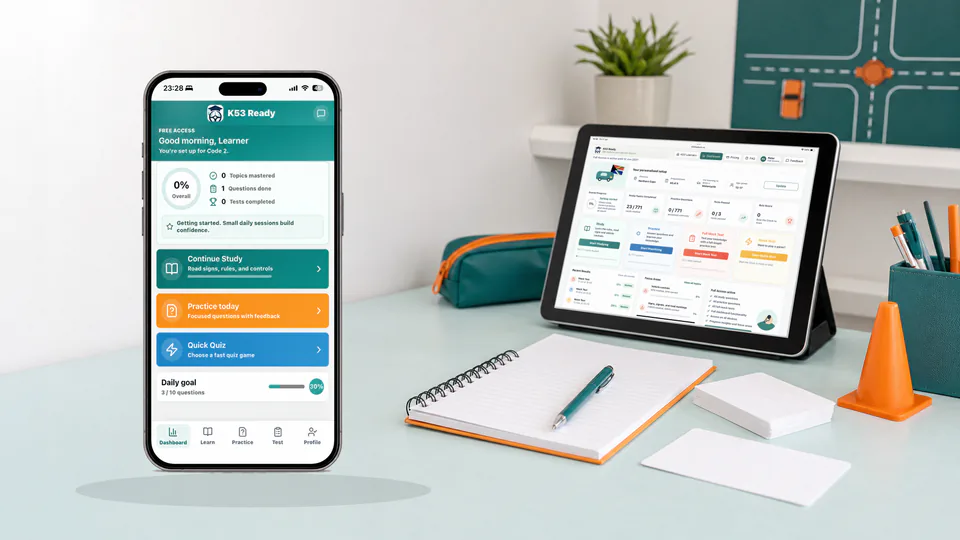
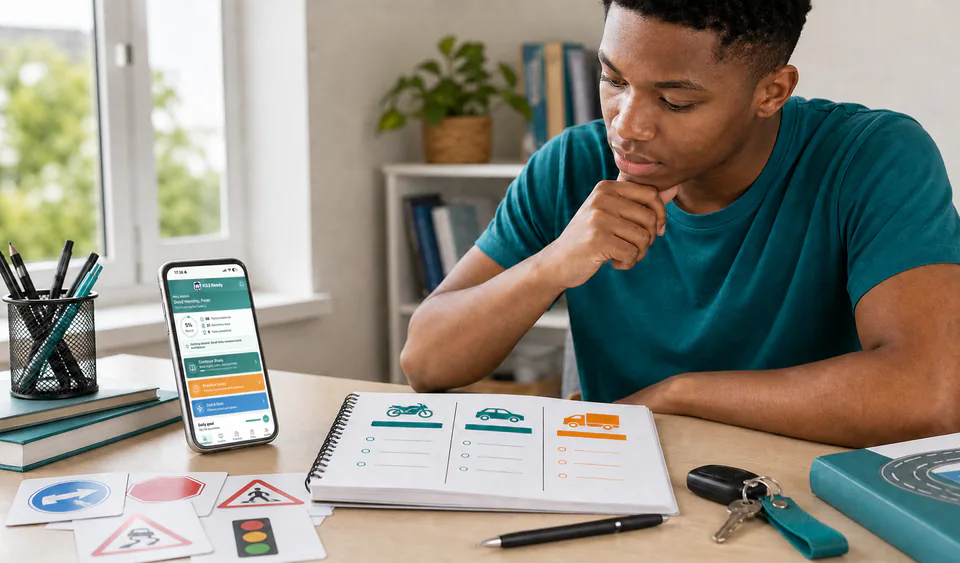
K53 Ready can help you keep those areas organised, especially if you choose your learner code in the app and then practise with that code in mind.
A simple decision check
Before you book, run this quick check:
- If you are preparing for a motorcycle, look at Code 1.
- If you are preparing for a normal light vehicle up to 3 500 kg, look at Code 2.
- If you are preparing for a heavier vehicle above 3 500 kg, look at Code 3.
- If you are unsure, confirm with your DLTC or official booking route before paying.
Choosing the right code is not about sounding clever. It is about studying for the vehicle you actually plan to use. Get that right first, then your practice sessions will make much more sense.